
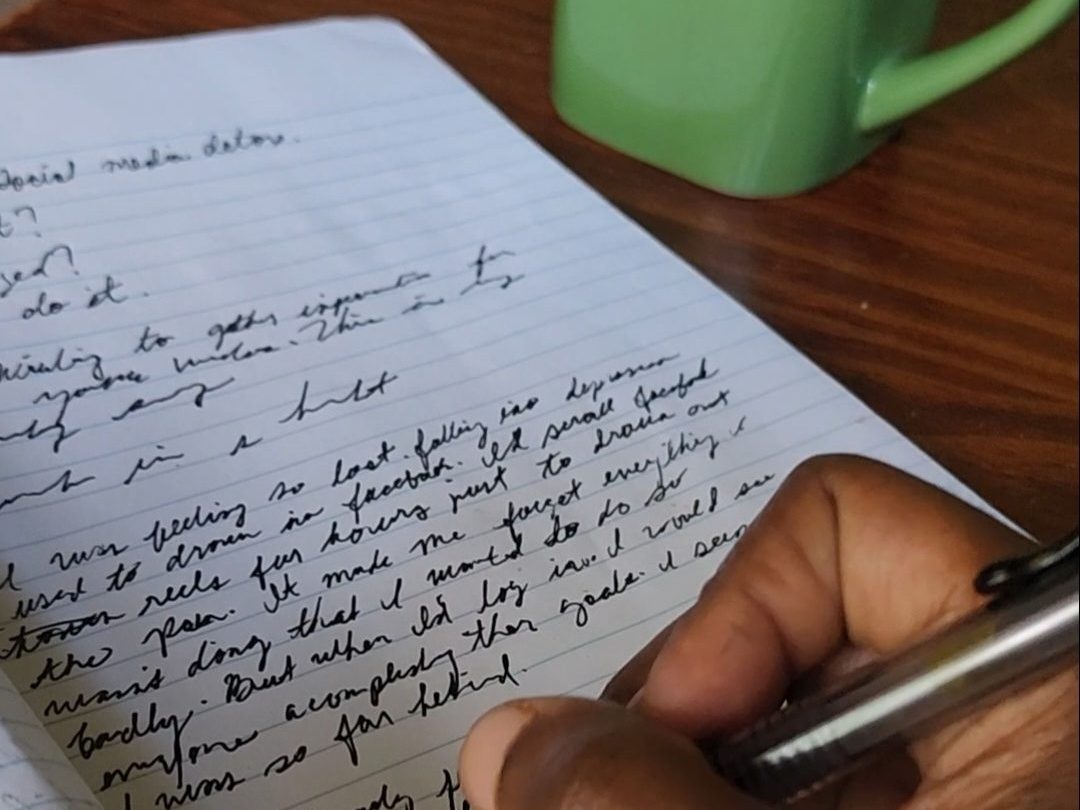
Your first draft should take 90 days and not 2 years to write. The “90 day first draft” method is used by many successful nonfiction authors who have discovered that finishing your “messy first draft” is key to publishing without taking years to write it the first time.
I learned this the hard way…
I wrote and self-published my first book as a mom of 9. It took me two years to finish it. Not because writing a book should take that long but because I threw away three full manuscripts trying to tell my story perfectly.
In 2026, self-published authors can reach global audiences and build sustainable writing careers. But first you have to stop overthinking and actually finish writing the book!
This guide covers what you need to know to QUICKLY write your first draft, the first version of your book so you can get published as soon as possible.
I had to learn how to write in very unideal chaotic circumstances, while writing with 9 children. I know it’s not easy, but writing and publishing a book never will be and the key to success with self-publishing your first book is writing it NOW, not when everything is calm. I had to learn how to write in the storm, not after it stops raining.
This blog post will teach you exactly why it’s so important to write your manuscript draft quickly within 90 days, and how to do it.
The Science Behind Writing Your Nonfiction Book Fast
Life doesn’t stop so we can “write in peace”. We have to write no matter what and that’s the only way to finish and finally publish your book. I coach my writers on sticking to 10-15 mins of daily writing and this why:
Momentum is everything. When you write quickly without stopping to make everything perfect, you actually get the story out with its important details.
Stopping too much to think while writing your first draft opens the door for your inner critic to start asking if you’re “telling the story right”.
Write your first book in 90 days, instead of “taking your sweet time” Here are the benefits:
- Maintain clarity: Your book’s core message stays clear in your mind. When you write over 2-3 months instead of 2-3 years. I took 2 years to write my first book, because I tried to tell the story perfectly. But that just wasted time. When I published I still wanted to “make it better”. That feeling never ends.
- Create better flow: Ideas connect more naturally when you’re writing while concentrating on what you want to say and not your mistakes with the words.
- Preserve enthusiasm: Nothing kills a nonfiction book faster than losing passion for your topic. Fast drafting keeps you excited about telling your story.
- Prevent over-researching: A deadline forces you to work with the knowledge you have, instead of getting stuck looking things up, which can be endless.
- Avoid analysis paralysis: Speeding the process silences the voice asking “Is this good enough? Am I qualified to write? Will anyone care?”
You write first, evaluate later.
“The first draft is just you telling yourself the story” by Author Terry Pratchett. Is my favorite writing quote…
When I feel overwhelmed with writing I literally turn the paper over and write these words down. “The first draft is just you telling yourself the story”.
I readjust my writing mindset to understand this version of my book isn’t the version I will publish. I will make it better later. That pushes me to write faster and improve my writing later.
Rule of thumb: NEVER write and edit at the same time. They require a different mindset for both. Write fast, edit later.
What “Fast” Actually Means for Nonfiction
Fast doesn’t mean superficial. It means:
- For self-help/non-fiction books (20,000 words min): 2-3 months at 200-250 words per day
- This is 10 minutes of consistent writing daily to reach the 90 Day deadline. Better than an inconsistent 1 hour session once a month. Putting you months behind.
- 90-day book deadline for your 1st draft. Many successful nonfiction authors use a 90-day framework to complete first drafts. This timeline is short enough to maintain focus but long enough to develop ideas thoroughly.
The Real Cost of Slow Drafting for Nonfiction
What happens when you take years on a nonfiction first draft:
- Your information becomes outdated: In fast-moving fields (technology, business, health, social issues), the landscape changes. That cutting-edge research from 2023? It’s old news in 2026.
- Your expertise evolves beyond your manuscript: You keep learning and growing.
- The expert writing chapter 1 in 2024 is different from the expert rewriting it in 2026. You chase a moving target.
- Opportunities pass you by: That speaking engagement, podcast interview, or consulting client who wants to work with “published author you”? They’re not waiting three years.
Your platform needs content now: Your audience wants your insights today, not in three years.
A finished book (even if imperfect) serves them better than a perfect book that never arrives.
Your motivation diminishes the longer it takes, the more you doubt whether your message matters. “Why can’t I finish this?” becomes a crisis of confidence.
It’s what almost made me give up in the middle of my first memoir. Since it took two years I wondered if I would ever finish and publish it.
The “Permission to Write Messy” Mindset for Experts
Give yourself permission to:
- Write explanations that aren’t perfectly eloquent yet (clarity comes in revision)
- Use placeholders like [ADD STATS HERE] or [FIND BETTER EXAMPLE LATER] I like to highlight these brackets so they’re easier to find when I come back to it.
- Skip sections that need research and come back later
- Include rough case studies or stories (polish them in editing)
- Write in your natural voice, even if it’s not “literary” , write like you’re “talking to a friend”. That’s what I always tell myself and it helps reduce anxiousness.
- Leave gaps in your argument (fill them during editing phase)
- State the obvious (what’s obvious to you isn’t obvious to readers)
- Use bullet points in the first draft. You’ll have better ideas when you come back to it.
- Write too much, then cut (easier than writing too little) and not having enough context.
Always remember this: “I can’t edit a blank page, but I can improve a rough draft.”
Many nonfiction authors sabotage themselves by trying to write their whole book in order, in a way that makes sense the first time.
The problems with this approach: It’s impossible.
Writers who keep this mindset never publish their writing, because they decided they “don’t know how to write a book”.
You cannot include everything you know/learned in one book. Even multi-volume encyclopedias can’t cover topics exhaustively.
You have to leave some stuff out. I learned this the hard way.
Wasted 2 years trying to fit everything. It’s not because the extra info isn’t important or relevant but because readers can’t enjoy every single page of a book. Many will skip “the fluff” anyway, after you spent months trying to perfect it.
Readers want focused, actionable, clear books, not encyclopedias.
They want the essential 20% that delivers 80% of the value. If your standard is “everything about this topic,” you’ll never finish because there’s always more to include.
Better approach: Write the book that solves ONE specific problem for ONE specific reader. You can write additional books later.
Self-editing process:
- Take a 2-4 week break before self-editing a full book.
- Read through your writing to be sure you included the main cores of your message. If you forgot things then add important points without trying to make it flow perfectly.
- If editing chapter by chapter, take a break of at least 1 week before changing the chapter around. Your eyes and mind needs to rest. This helps with clarity.
Before you publish your book consider hiring a developmental editor. That was the best decision I made while publishing my first book.
I paid nearly $2,000. But I was able to get payment plans. I really couldn’t afford it but I wanted a professional book that would connect well with my readers.
I got two different editors. What almost stopped me was the money it costed and then also the thought of being embarrassed about my writing.
Just think about it…it’s more embarrassing to have several people talking about how they wasted money on your book because it wasn’t that useful and there was a lot of mistakes in it, then it would be to have one or two people help you correct those mistakes. The embarrassment can be in private before you publish.
That’s what I chose. Now I will choose developmental editing no matter what. Even the most famous of authors hire editors, because no one will see your book the way you do.
You’re too emotionally attached to your own writing and you worked hard on it, so you don’t want to cut things out. Constructive feedback is what makes a book a better book and you want your readers to feel satisfied after reading.
If they don’t love it, then they may not finish reading it…ever. So make it the best version possible by getting feedback on your chapters.
What I paid for editing was worth it because my readers emailed me to tell me how much they loved my book. I got DMs on social media positive reviews on Amazon.
I’m confident it’s because I got expert guidance on how to tell my story in a way that will resonate with my readers to build emotional connection.
Before hiring a developmental editor I told my story in a way that I got it off of my chest. But what was missing was strategies for how my readers could use my book to navigate their own paths.
Most people care most about themselves. So they want to read your book to help solve their own problems. They are looking for connection and guidance. So when you tell your story it should be in a way that helps readers find solutions.
Invest into your dream of being an author. So you can write a book that has the greatest impact on your readers. It’s worth every penny! The money will likely go to something else anyway, maybe something that isn’t even as valuable as your dream coming true.
What to expect to pay:
Developmental editing: $0.02-0.05 per word (improves structure and story)
Copy editing: $0.015-0.03 per word (fixes grammar, consistency) do this part last!
Budget tip: For a 20,000-50,000 word memoir, expect $700-$2,500 for professional editing. Depending on rounds of edits you need.
As a Muslim mom of 9, I know how vulnerable writing feels and how hard it is to tell your story and maintain privacy. There’s a lot we want to share to help others but there’s also so much we know needs to stay within our homes.
It’s why I created my FREE Quick Start Guide: How to Tell Your Story for Faith-based Writers, perfect for private moms who have a story to tell. Click the link below to grab your free copy today!
https://shop.beacons.ai/aminahibrahim/461287c2-d1f2-42f4-947b-e3d9e0d8349f
Until Next Time, Happy Writing!
 Aminah Ibrahim
Leave a comment