
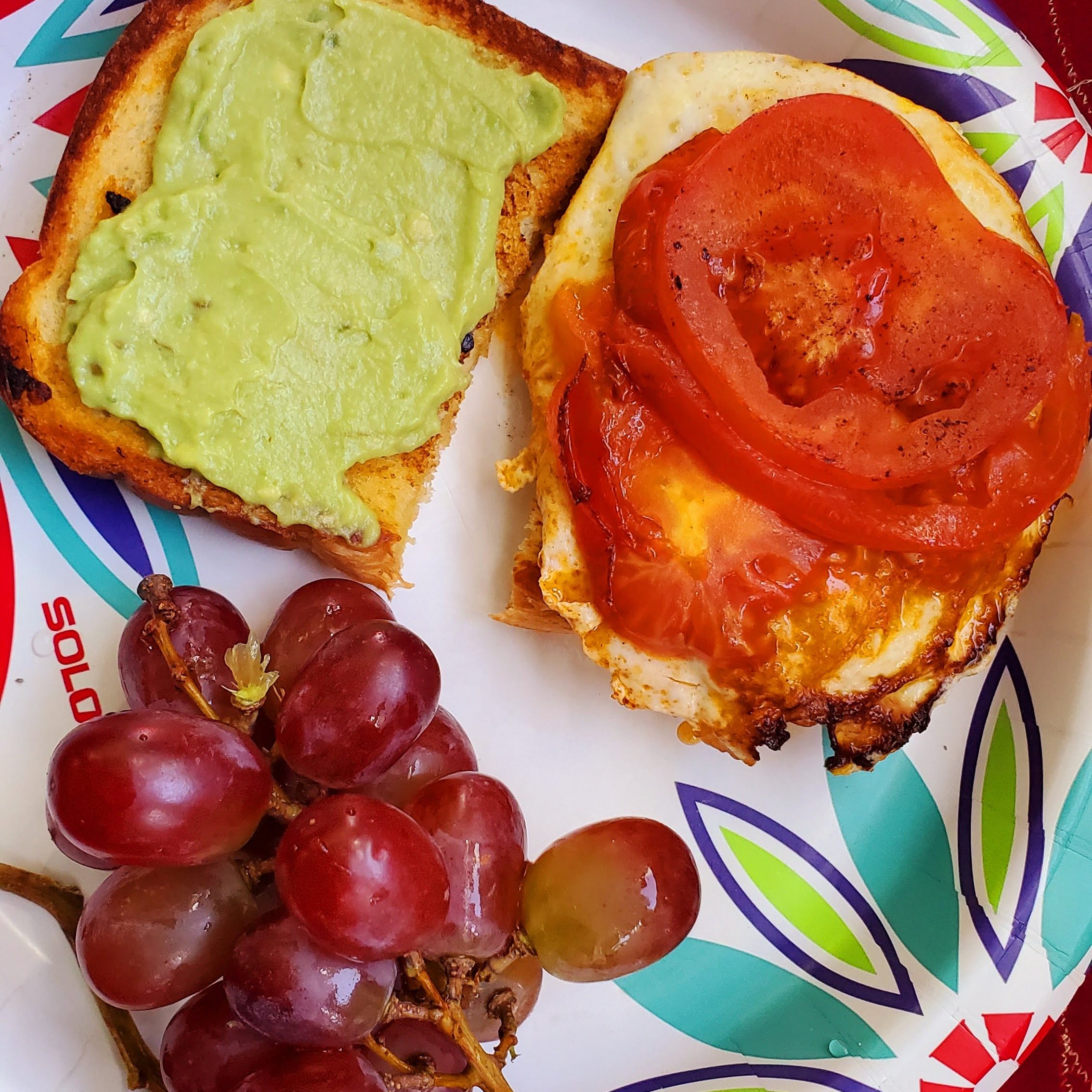
I used to be obsessed with low carb dieting and said I would NEVER do a healthy lifestyle…I never imagined the day would come that I would lose 40lbs while eating grapes, bread, and even pizza! It did take time to trust carbs and transition into healthy living. In this blog I want to help you understand why switching from low carb is so hard and what happens to your body when you go back to eating carbs.
If you’re experiencing intense carb cravings and rapid weight gain here’s what’s really happening in your body—It’s not just a matter of willpower.
If you’ve recently stopped a low carb diet and found yourself gaining weight rapidly while feeling completely out of control around carbs, you’re not alone. You might be thinking, “I just need to get back on keto to control myself again.”
But what if I told you that these intense cravings and weight gain aren’t signs that you need more restriction—they’re signs that your body is trying to heal?
Let’s talk about what’s really happening when you stop low carb dieting, why you gain weight so quickly, and most importantly—why this isn’t you “just being weak”.
The Truth About Carb Cravings After Keto
Why You’re So Hungry for Carbs (Hint: It’s Not Weakness)
I did low carb dieting for 10 years. I had a love hate relationship with the Atkins diet. And was head over heels with the “Induction phase”, (that’s the part where you lose 14 pounds in 14 days). One of the side effects of low carb dieting was when I stopped I would accidentally go on a carb eating rampage.
This would be after I reached my weightloss goal. After stepping on the scale feeling so beautiful, strong, and disciplined—seeing that 15 pound weightloss. I would always say “this time I’m not gonna over do it”. I would plan to eat small amounts but as soon as I was mentally free from the dieting rules I completely lost control with this overwhelming hunger for bread, pasta, rice, and sweets.
When I hit rock bottom with dieting was the day I was crying in the closet because I had eaten a peanut butter & jelly sandwich! Yes, me a mom of 5 at the time, was crying real tears like a baby…
I was so disappointed with myself because I wanted with all of my heart to not eat bread but it was like the obsession with everything I couldn’t have before wouldn’t end.
Today, as a mom of 9, I remember it clearly although I stopped dieting 6 years ago. Once I stopped dieting and began healing my relationship with food I lost 40 pounds without cutting out bread, potatoes, or pizza.
I learned to eat them all in appropriate portion sizes and actually be SATISFIED, no longer bouncing my knees with anxiety because I really want to binge on it. Before you click away thinking I accomplished this due to some “magical” willpower just hear me out…
After 10 years of low carb dieting I was desperate to learn about how to create a lifestyle that included all the carbs I love so I could lose weight without dieting and keep it off. I became a Certified Health Coach. I was desperate to learn how nutrition effects the body and why carbs make you gain weight I later learned my carb binging behaviors AFTER my low carb dieting were not a lack of willpower. This is biology. When you’re low carb dieting your body is deprived of its preferred fuel source, CARBOHYDRATES. No willpower can undo the way our bodies were chemically wired.
Don’t get me wrong I’m not saying low carb has no benefits ever, because that wouldn’t be true either. Ketosis longterm isn’t an ideal weightloss strategy. That’s my point here. I’m not arguing that no one has ever had health benefits from temporarily being in ketosis. Hence the word TEMPORARILY. That means as long as we low carb diet there will be CHEAT days and those cheat days will likely turn into binging on carbs. Because the diet itself goes against human nature, biology. Binging is not due to a lack of willpower. It’s our bodies trying to recover from an unnatural lifestyle of severely low carbs. Humans will always need carbs to survive.
I know you’ve heard this phrase a thousand times—”carbohydrates are the body’s preferred source of energy”—but do you really understand what that means for your body and why you’re experiencing these intense cravings? The cravings are your body pushing you to feed it potatoes, fruit, beans, and whole grains (natural and healthy carbs) but the body will settle for any carbohydrates it gets so you may crave the ones you were used to eating if you never gave it the healthy versions…the unhealthy versions: white bread, processed pizza, milk chocolate, muffins etc. When I started a healthy living lifestyle, I didn’t have to give these up entirely either. And neither did any of my clients. Each reported having a healthier realationship with food and satiety having smaller better balanced portions.
It definitely takes time for you to both learn your body’s needs and understand how to fuel those needs without binging or being restrictive. Eating in a balanced way. I know you’re thinking it’s impossible to eat small amounts of carbs. I said I could never do it and most other people who have reached their goals through dieting have also believed without all the strict rules they could never be successful losing weight or getting healthier. If you’re in the healing phase of reintroducing carbs back into yiur life then that’s a feeling that’s legitimate but it’s only temporary. It will pass once your body trusts that it’s safe. That takes time, weeks, months, a year maybe.
It depends on how long you spent dieting. I used to tell myself I spent 10 years dieting so it’s okay if I haven’t fully healed in 5 years. I’ve been an intuitive eater for 6 years now and I believe healing is a lifetime journey. It’s hard to admit as a professional that sometimes I still wonder if I’m getting close to overdoing it when I eat a couple of pieces of pizza or when I have multiple cups of juice. What I found is allowing myself to have it in those moments breaks the binge cycles.
It will never be perfect. It’s not supposed to be. And again it took me years to accept this. I worked on feeling guilty about eating food for a long time. It doesn’t happen overnight. The guilt lessens over time and eventually you’ll feel like you have peace with food. But that won’t come until you eat what you really want to eat. You can do this with portion control of the foods that potentially gain weight, but the portion control aspect shouldn’t come initially in the beginning of introducing carbs back in. Give it 1 or 2 months.
When you finally allow yourself to eat carbs again, you may experience:
Intense cravings for bread, pasta, sweets, and starches that feel impossible to ignore
Feeling like you can’t get enough carbohydrates no matter how much you eat
Obsession with formerly “forbidden” carb foods
Eating past comfortable fullness once you finally get your hands on your favorite carbohydrates.
The urge to binge on carb-rich foodsThis is where the restrict-binge cycle typically kicks in. You eat “too many” carbs, feel out of control, panic, and think “I need to get back on keto to control myself.” But here’s what’s really happening.
Why Low Carb Diets Set You Up for the Restrict-Binge Cycle
Once you stop or take a break from a low carb diet, so many “things go wrong” that make you feel like you need to get back on the diet to have “control of yourself” with food.
But the truth is: Each time you quit the diet, your body will try to recover from not having enough carbs, and you will crave them. These will be intense, primal cravings. It’s not a weakness on your part.
This is your body’s survival mechanism kicking in. And each time you restrict carbs again, you reinforce the cycle:
Restrict carbs → Feel deprived → Crave carbs intensely
“Fall off” the diet → Binge on carbs → Feel out of control
Panic about weight gain → Go back to restricting carbs
Repeat
The problem isn’t you. The problem is the restriction itself.
What Actually Happens to Your Body on a Low Carb Diet
The Science Behind Your Carb Cravings
When you severely restrict carbohydrates (typically under 50g daily), your body enters a metabolic state called ketosis, where it burns fat for fuel instead of glucose.
But here’s what most people don’t know: Your body also downregulates certain enzymes needed for carbohydrate metabolism because it’s not using them.
According to the National Institutes of Health (NIH.gov), during ketosis, key enzymes in “glycolysis (glucose breakdown) are suppressed, while those in gluconeogenesis (glucose synthesis) and fatty acid oxidation are upregulated.”
In plain English: Your body essentially “forgets” how to efficiently process carbs because it hasn’t been doing it.
Then, after you reintroduce carbs into your regular diet, your body has to relearn how to process them. The NIH explains: “When carbohydrates are reintroduced, the body needs to regulate and reactivate these suppressed glycolytic enzymes to efficiently process the incoming glucose.”
Why You Experience These Symptoms After Quitting Low Carb
When you start eating carbs again, this metabolic shift is why you might experience:
✗ Initial water weight gain (because glycogen stores water—more on this below)
✗ Digestive discomfort when eating carbs
✗ Energy fluctuations as your body readjusts
✗ Increased appetite and intense hunger
✗ Feeling bloated or uncomfortably full
These symptoms make you think something is wrong with you or that carbs are bad for your body. But really, this is just your body adapting back to its natural, preferred way of getting energy.
Why You Gain Weight So Quickly After Stopping Keto
Let’s address the elephant in the room: rapid weight gain after quitting low carb.
This is often the most distressing part of stopping a low carb diet, and it’s what sends many women running back to restriction. But understanding what you’re actually gaining changes everything.
It’s Not Fat—It’s Glycogen and Water
Here’s what’s really happening when you see the scale jump 5, 8, or even 10 pounds in a matter of days or weeks:
For every gram of carbohydrate stored as glycogen in your muscles and liver, your body stores 3-4 grams of water.
When you were eating low carb, your body depleted its glycogen stores—and all the water that comes with them. This is why people lose weight so quickly when they start keto. It’s not fat loss; it’s water loss.
Now that you’re eating carbs again, your body is simply replenishing the glycogen stores it’s supposed to have. This is not only normal—it’s necessary and healthy for your body to function properly.
Your muscles need glycogen for energy. Your brain prefers glucose for fuel. This weight is not a problem to fix—it’s your body healing.
The Scarcity Response: Why You Can’t Stop Eating Carbs
There’s another reason you might be eating past fullness when carbs are involved, and it has nothing to do with the physical properties of carbohydrates.
The Scarcity Response: After months or years of labeling carbs as “bad,” dangerous, or off-limits, your brain genuinely believes this might be your last chance to eat them before you “get back on track.”
This is primal hunger combined with psychological deprivation—and it’s completely normal.
Your brain is thinking: “I don’t know when I’ll be allowed to have bread again, so I better eat as much as I can right now.”
This isn’t a character flaw. It’s your brain trying to protect you from future deprivation.
How to Eat Carbs & Start a Healthy Lifestyle
The first year I started my healthy living journey without dieting I focused on foods to include on my plate instead of what to keep off. But you have to ditch the diet mentally of “all or nothing” to do this. Let me give you an example. If i ate pizza I would add salad on the side or an apple or anything healthy available, that way the fiber in the healthy foods would control the blood sugar spikes from the simple carbs (white bread etc).
I focused on avoiding feeling deprived. So if I wanted a bagel for breakfast I would have a bagel and a bowl of mixed fruit: sliced oranges, berries, and nuts for example. I had to unlearn what low carb taught me. Because you can’t lose weight eating oranges and apples on the low carb diet that doesn’t mean you can’t lose weight eating fruit on a healthy lifestyle journey. The two aren’t the same! One takes longer to show results because of the healthy habits that must be implemented regularly for your body to shed the excess weight and trust availability of food. When you trust your body it will use the healthy foods to burn fat naturally but you can’t skimp on the natural foods in order to lower carb intake.
What brought me the most success with losing 40 pounds without dieting was having no limits to natural foods. That meant is i wanted to eat a half a watermelon then I could. When it came to sweets or packaged foods I would look for the serving sizes on the package and not exceed twice the serving sizes. But honestly even that is a limiting and restrictive for someone is is just reintroducing carbs. You have to let go of the rules in order the trust food again. Stick with cleaner ingredients (10 items or less) and honor your hunger.
Eat when you are hungry and stop eating when you are no longer hungry. This cuts out snacking out of boredom and overeating just because the food tastes good. Most of the time it’s not the carbs alone causing weight gain, it’s overcomsumption of calories that happens to include carbs.
I hope you’ve found this blog to be healing. Keep going, you can do this!
 Aminah Ibrahim
Leave a comment